Ragnarök
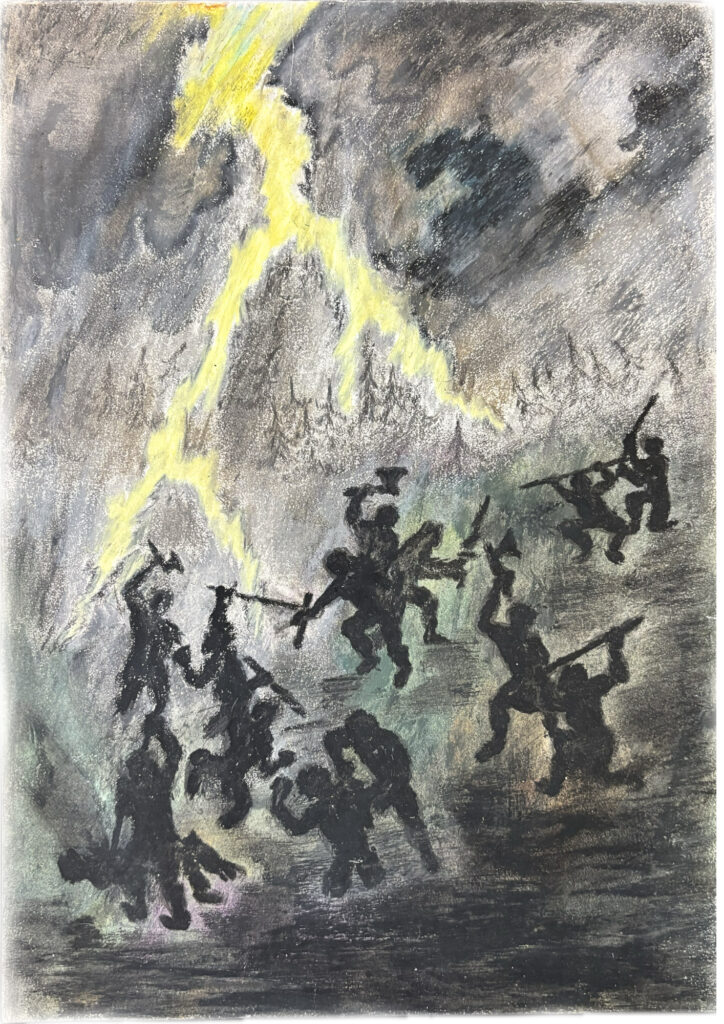
There comes a winter called the Fimbul Winter. Then snow drifts from all directions. Three winters follow one another without a summer in between. The cold is bitter and the wind is sharp. Famine and crop failure spread across the land. During these years war rages through the world, and all things fall into ruin. Brothers kill each other for greed. Children of sisters break the sacred laws. No one spares their father, no one their son. It is the time of the axe, the time of the knife, the time of the split shield, the time of the storm and the time of the wolf.
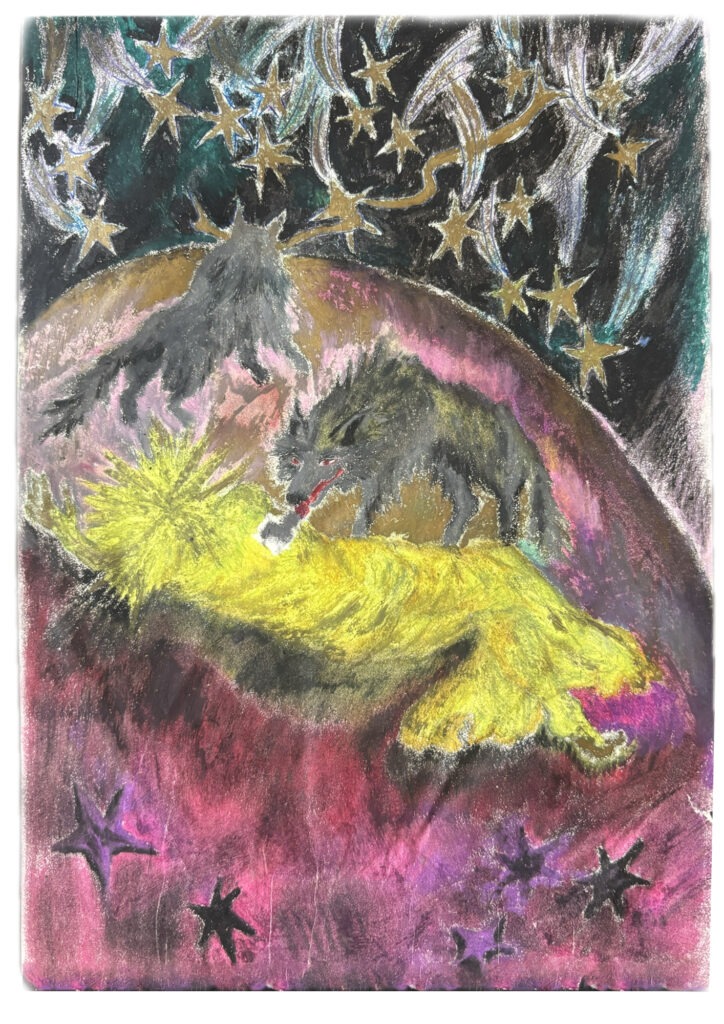
Then the earth trembles. Mountains split and the giantesses plunge helplessly into the sea. Ancient shackles break and the Fenrir wolf, who has long been chained in the depths of time, breaks loose. With jaws gaping at heaven and earth, he devours the sun. At the same time, his son Hati chases down the moon and swallows its light. The stars vanish. Darkness falls.
The Midgard serpent rises in anger from the depths of the sea and crawls onto land. The sea overflows and floods outward. At the same moment, Naglfar, the ship built of dead people’s nails, breaks free. It is steered by the giant Hrym, and with him is the army of giants. Yggdrasil shudders to its roots and mankind walks the road to Hel, trembling with fear.
At the same time, the sons of Muspell ride out of the realm of fire. Surtr rides foremost, wielding a sword that blazes brighter than the sun. Before him and behind him, the worlds burn, and as they ride over Bifrost, the bridge breaks.

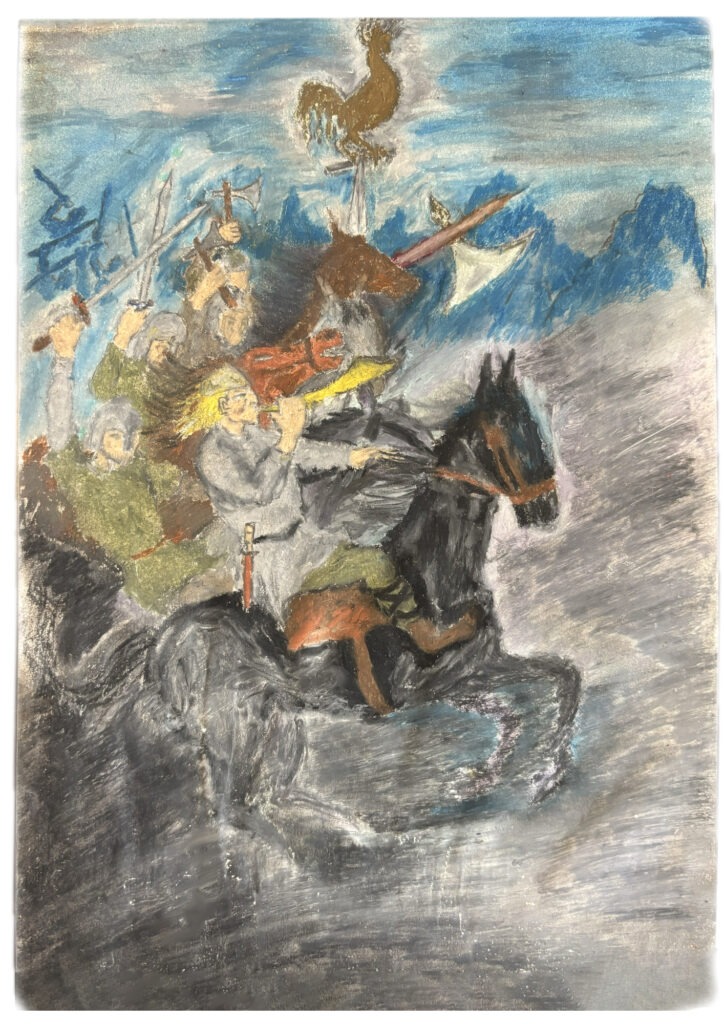
Then the rooster Fjalar crowed in Jotunheim’s iron forest, fiery red and wild, his voice like a storm over mountains and ice. Next, Gyllenkamme sang high in Asgard’s golden sky, bright as the dawn. And deep in Hel, the soot dark rooster let out his cry, and with it, the dead awoke. Their three cries rang like doom bells shaking the roots of the world.
Heimdall raised his horn. He blew the Gjallarhorn, and its sound echoed through all nine worlds.
The fatal blast made Yggdrasil shudder and quake, and the gods gathered. Odin rode to Mimir for advice, and a final ting was held. Then the gates of Valhalla and Folkvang swung open, and all marched forth to meet their final destiny. On Vigrid’s sprawling thousand mile plain, the worlds meet for the last battle.
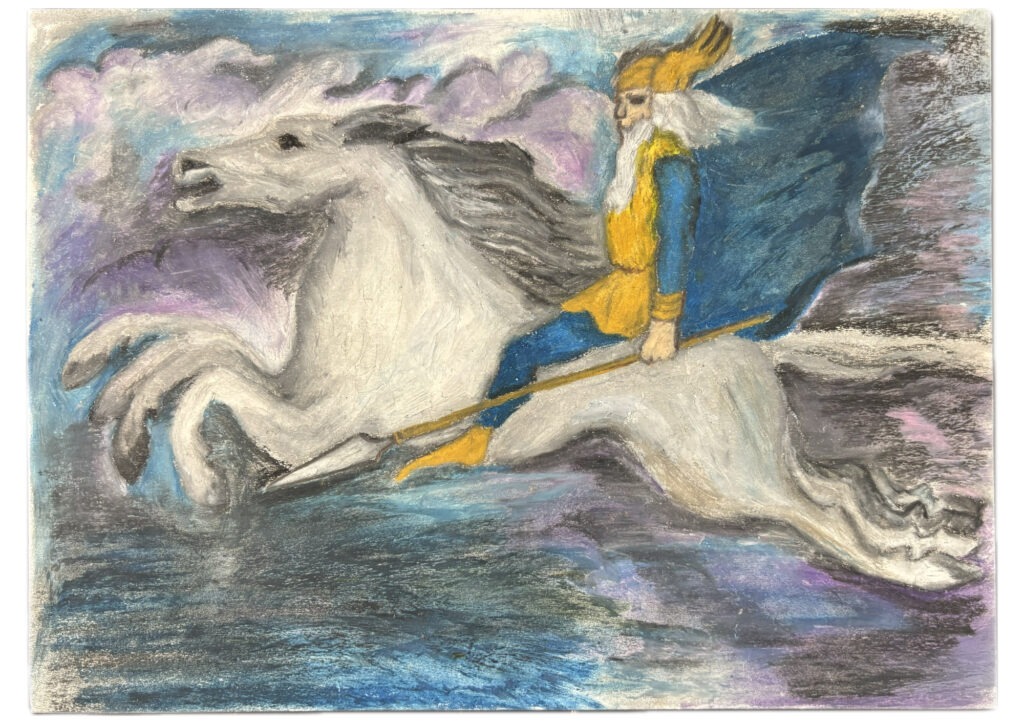
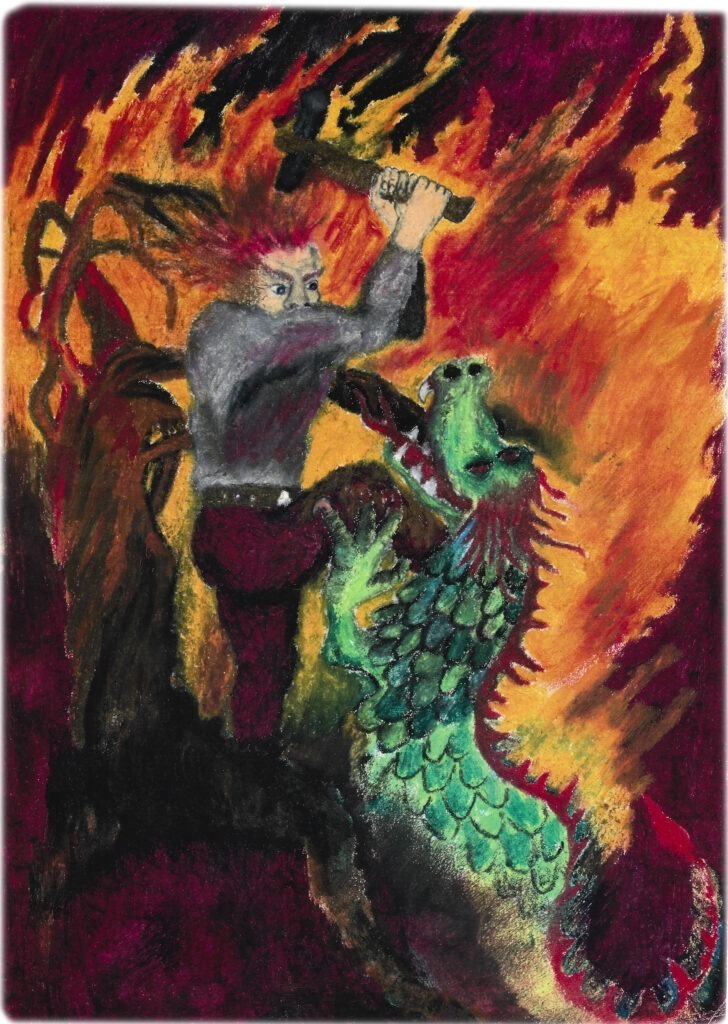
Odin storms towards his archenemy, the Fenrir wolf. But the wolf’s jaws are like a bottomless chasm and Odin is swallowed alive. The terrible forces close around him, binding him forever. His son Vidar then steps forward, silent and powerful, to avenge his father. With his thick soled shoe, he stomps the wolf’s lower jaw on the ground and grabs the upper jaw and tears the beast to pieces. Thor clashes with the Midgard Serpent. His hammer does not fail him and with Mjölnir he crushes the beast. But not without a price, for the serpent’s poisonous breath coils around him. Thor staggers nine steps before falling dead to the ground.
Heimdall and Loki impale each other with their spears. Garm, the wolf guarding the gate of Hel, attacks Tyr. Tyr fights bravely but the battle is uneven and Tyr is swallowed like Odin. Yet before he dies, Tyr pierces Garm’s heart from within and so the beast dies. Heimdall faces Loki in battle, two flames merging into light, equally fierce. Both burn out. Both perish. Freyr now stands alone against Surt, yet without his magical sword, long since traded away to win his beloved Gerd. Armed only with a stag’s antler, he faces death unarmed. Surtr’s merciless flames consume him, and Freyr is destroyed.
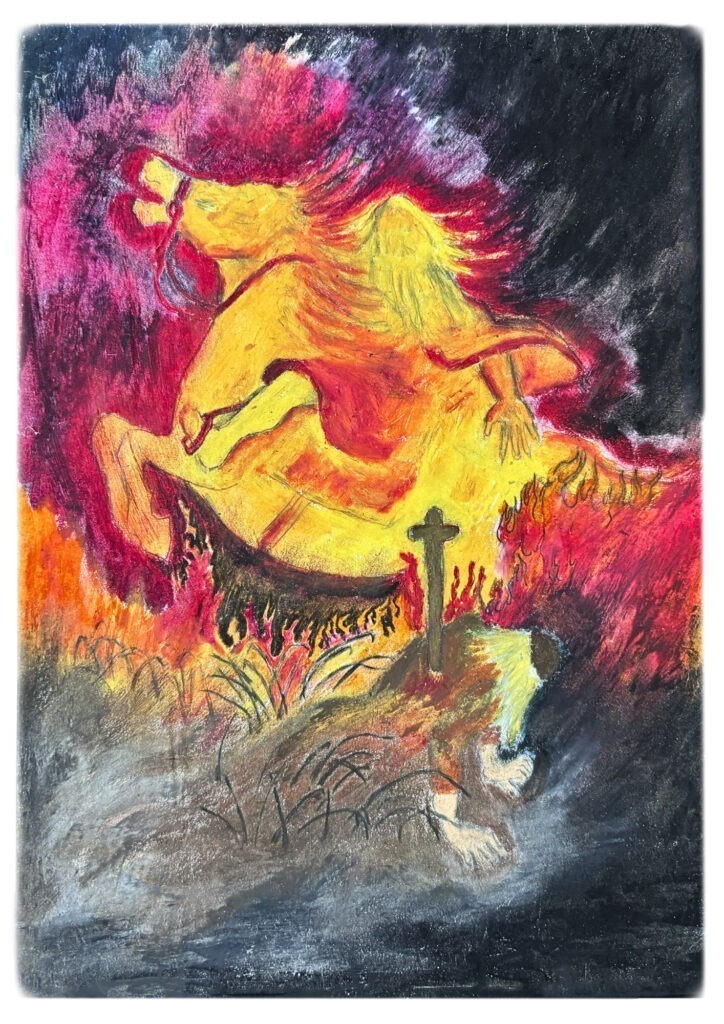
Finally, Surtr swings his sword and everything is consumed in fire. The earth sinks into the sea. The world descends back into Ginnungagap, the primeval void that existed before creation. All is still.
But when the flames have died down, when the sea has retreated and the ashes have settled like a veil over the world, a new sun rises in the sky. The earth emerges again from the depths of the sea, green, fair and peaceful. Unsown fields begin to sprout and grow, and the daughter of the sun rides her mother’s path across a new, clear sky.
Those who have survived gather upon Idavallen. Baldur and Höder return from the realm of the dead. Thor’s sons Mode and Magne have endured and carry Mjölnir in their father’s place. Vidar and Vale, Odin’s sons, have survived. As have Odin’s brother Hönir and most of the Asynjur. And deep within the protective shadows of Yggdrasil, in Hoddmími’s sacred grove, two humans have hidden from the flames. Their names are Líf and Lífþrasir, and through dew and darkness they have survived the end of the world. From their lives, a new human race shall sprout. A new dawn approaches, and a new world will bloom, green, clear, and beautiful.
But not all is forgotten, and evil has not entirely vanished. In the distance, where thick fog shrouds the Nida Mountains, the flapping of wings is heard. Nidhögg, the dark dragon, soars over the newborn world, carrying the dead in his feathers.
Thus the tale ends.
Thus it begins anew.