Runic inscriptions were the written language of the Vikings. The runic alphabet, known as the Futhark, takes its name from its first six runes: f, u, þ, a, r and k. Most inscriptions were probably carved into wood that has since decayed, but the runestones remain, standing as timeless storytellers of the Vikings’ lives and adventures. More than a thousand years later, we can still read their words and catch a glimpse of their world.
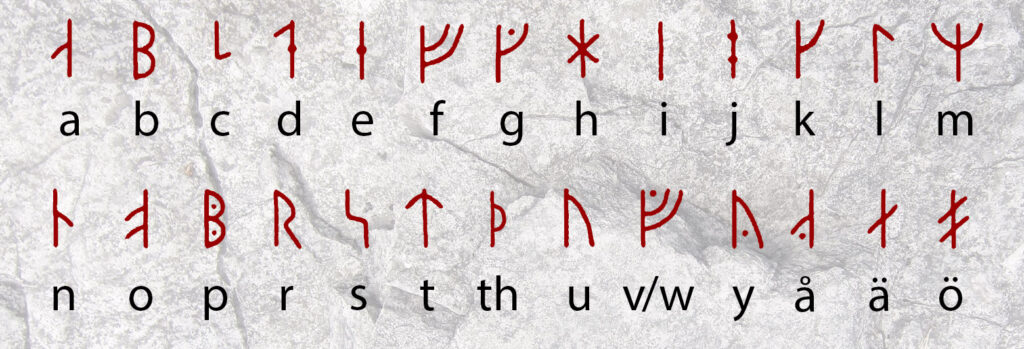
The Younger Futhark, shown below, was introduced in Scandinavia in the 8th century.
By the late 10th century, as reading and writing became more important, dots and other markings were added to distinguish between certain runes. These are known as “stung” runes.

Try it and write your own secret Viking message!
This Futhark features stung runes with additions developed by rune carver Kalle Dahlberg.